Architecture Design
Beyond Altruism - Mixed-use
.png)
This project is mixed-use, in a combination of social housing and retails as well as a working space for a nonprofit organization named Red Room. The project includes 18 single-family units, eight senior housing, and nine studios. For the Red room, some requirements of their facilities: a community base, a multi-purpose space, and a meeting room.
The site is in a residential area accessible by public transportation and the riverside biking trail. It used to be a thriving neighborhood in downtown Taipei; however, the population decreased and aged with time passing. Therefore, the government wants to revitalize the area by bringing in new programs, with an expectation to improve the living conditions for people living here.

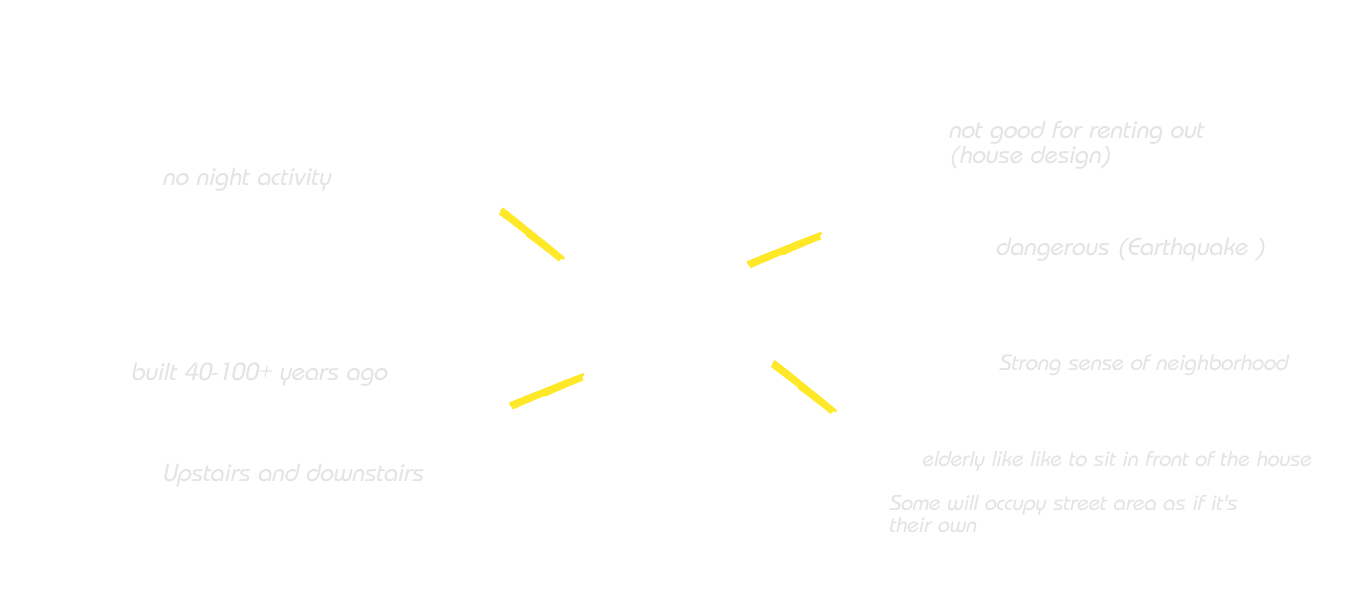
I began investigating the daily life of the elderly and interviewed them to understand better what it feels like to live here and what they want to change if they can rebuild this site. These resident interviews greatly influenced the direction of the design.
This design project has precise requirements for building floor area ratio and the number of spaces, which is a challenge for me as a junior. I used the model to study the planning of the effective design on the triangular site. The bricks with different colors represent a separate program; by modularizing the unit, I can play with the model and try to stack them together to find a suitable arrangement.
.png)
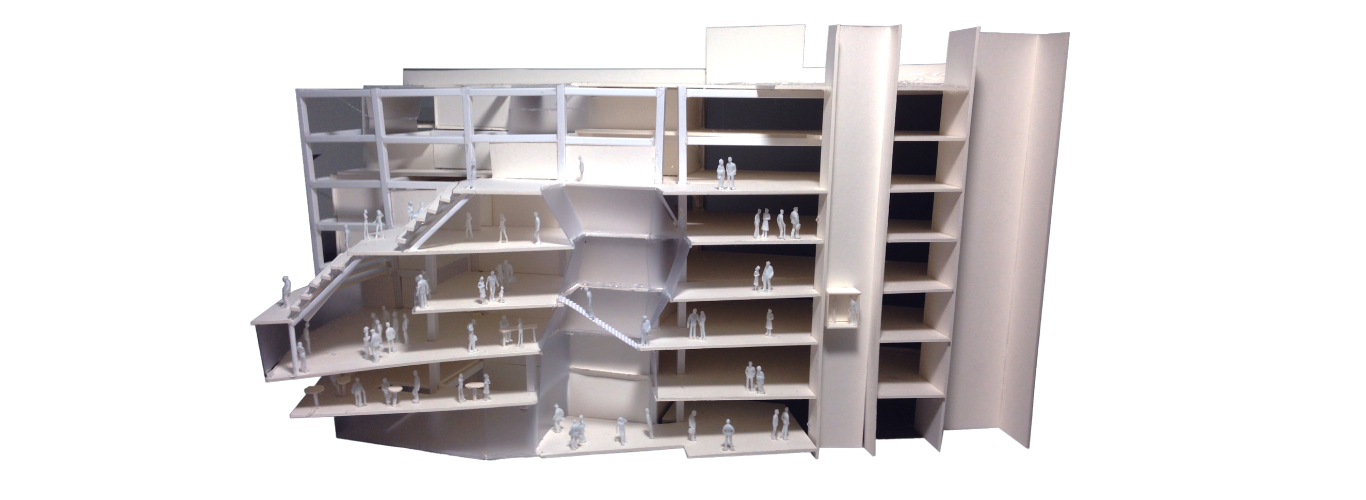
I arranged the retail and child care spaces on the first and second floors, while the non-profit organization space was planned in the middle of the third and fourth floors. These non-resident-accessible spaces have separate elevators and stair entrances.
The residential space is divided according to the needs of residential habits, which I learned from the interview and some of my assumptions. The residential unit for the elderly is planned on the first floor on the north side, away from the main road, so they can still retain the living environment and neighborhood life with independent entrances and exits.
Residential units for single-parent families are planned on the second to third floors. Unlike the typical single-story houses in Taiwan, it is designed in two-stories units, with a rentable suite.
The youth housing units are all planned on the highest floors. Therefore, if an earthquake happens, unfortunately, this group of people has the physical strength to escape more than any other vulnerable group.


.png)