Digital Design
Parametric Design Collections
.png)
I learned digital design while studying at the Architecture department of Tamkang University. I started with a basic of building three-dimensional models, then reached a point where I am proficient in modeling some complex geometry. Then, in my fifth year, I started to learn parametric designing (using a plug-in called grasshopper). Throughout a year of practicing, I mastered the basic logic of parametric design, knew how data structure gets built and matched, and created a multivariate and complex but logical model.
The following selected projects were my practices by following tutorials and in-class projects; some were my original design.
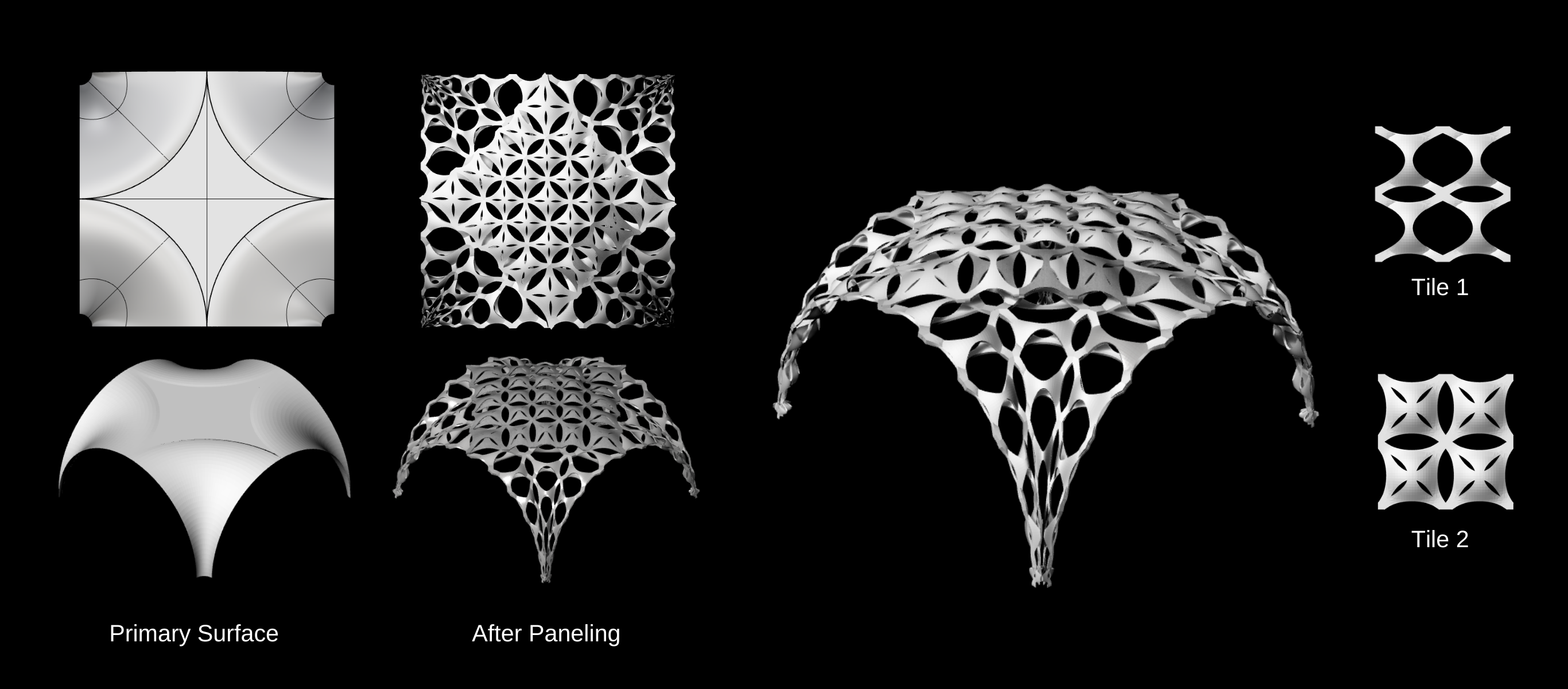
A tessellation or tiling is the coverings of a surface, often a plane, using one or more geometric shapes called tiles, with no overlaps or gaps. I used two tiles in this design, one for covering and the other for structural purposes, to tessellate the primary geometry. Applying the tessellation technique, one can create multiple outputs with different tiles on the same primary geometry.
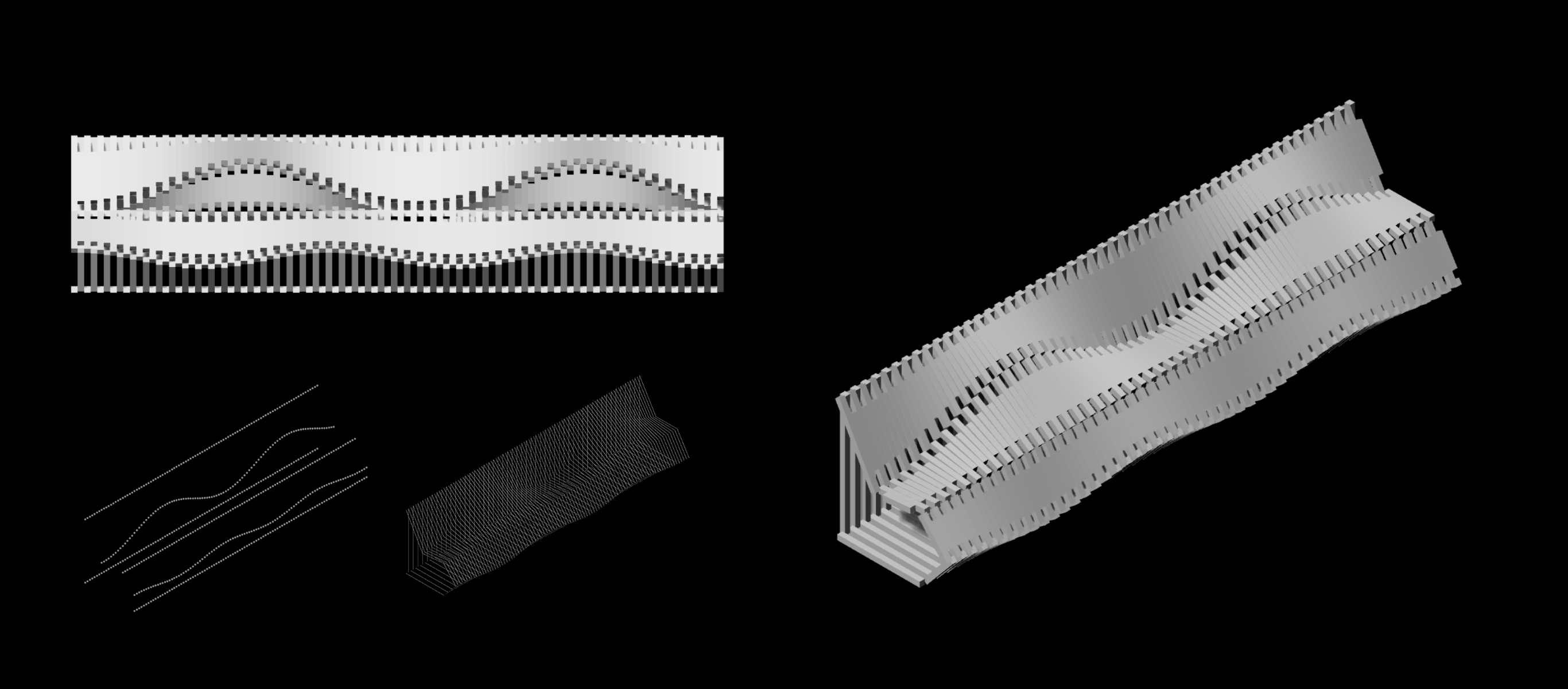
This design is entirely parametric, and all definitions are recorded in Grasshopper using a graph mapper and manipulating the timber length to create an interwoven bench.
.png)
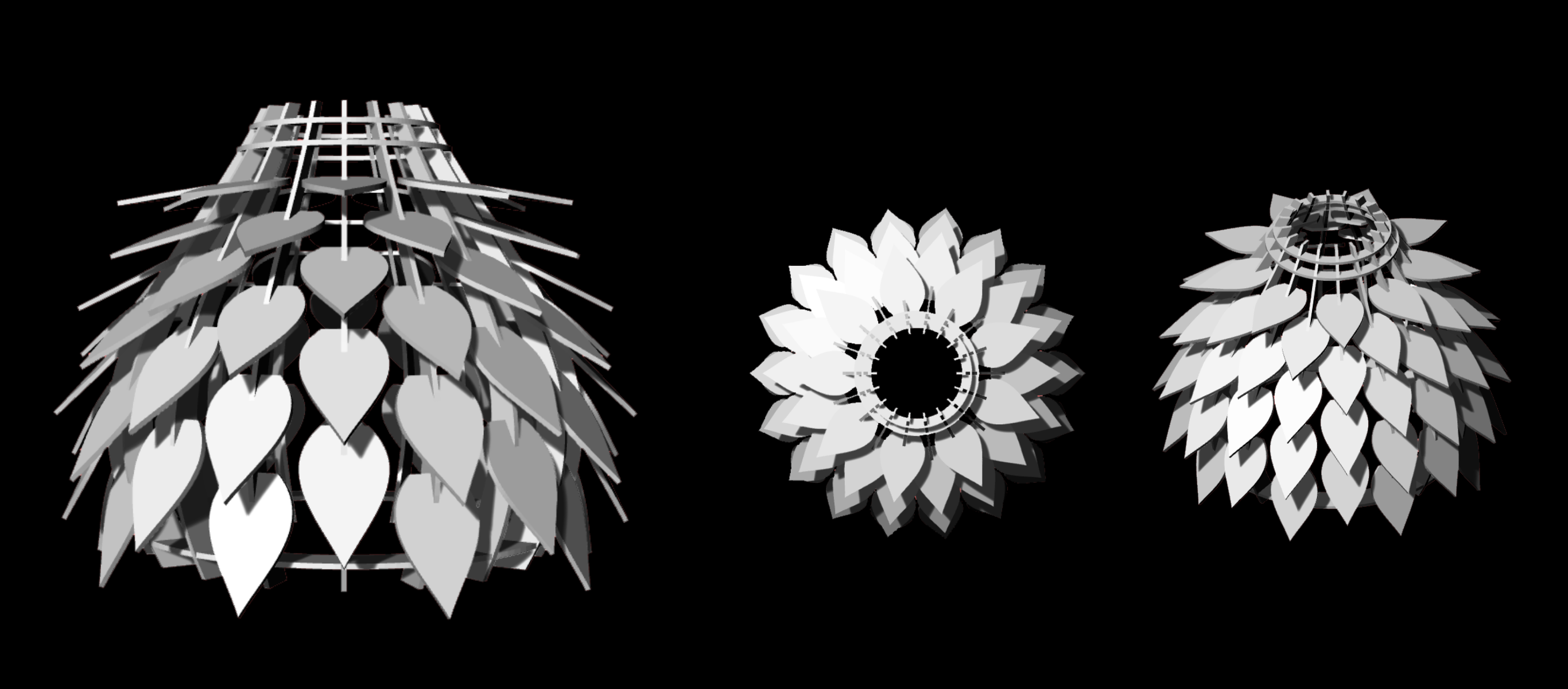
There are three definitions used to shape the curvature of the skeleton, the arrangement of the leaves, and the angle of leaf surfaces, where only the appearance of the leaves is imported outside the definitions.
.png)
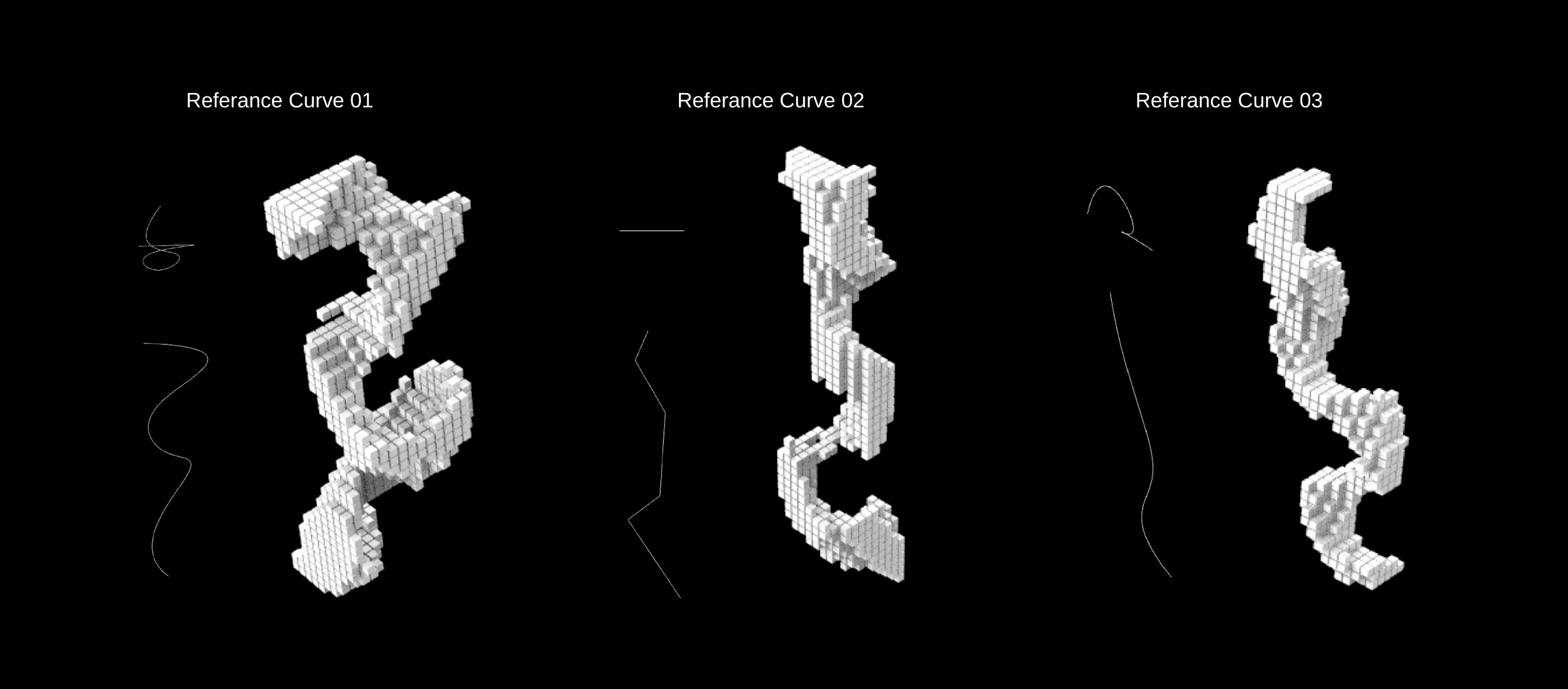
The design is a series of procedures to create boxes around the input curve. Compared with earlier methods, this algorithm includes a decision-making process, which only generates boxes in a certain adjacency.
.png)
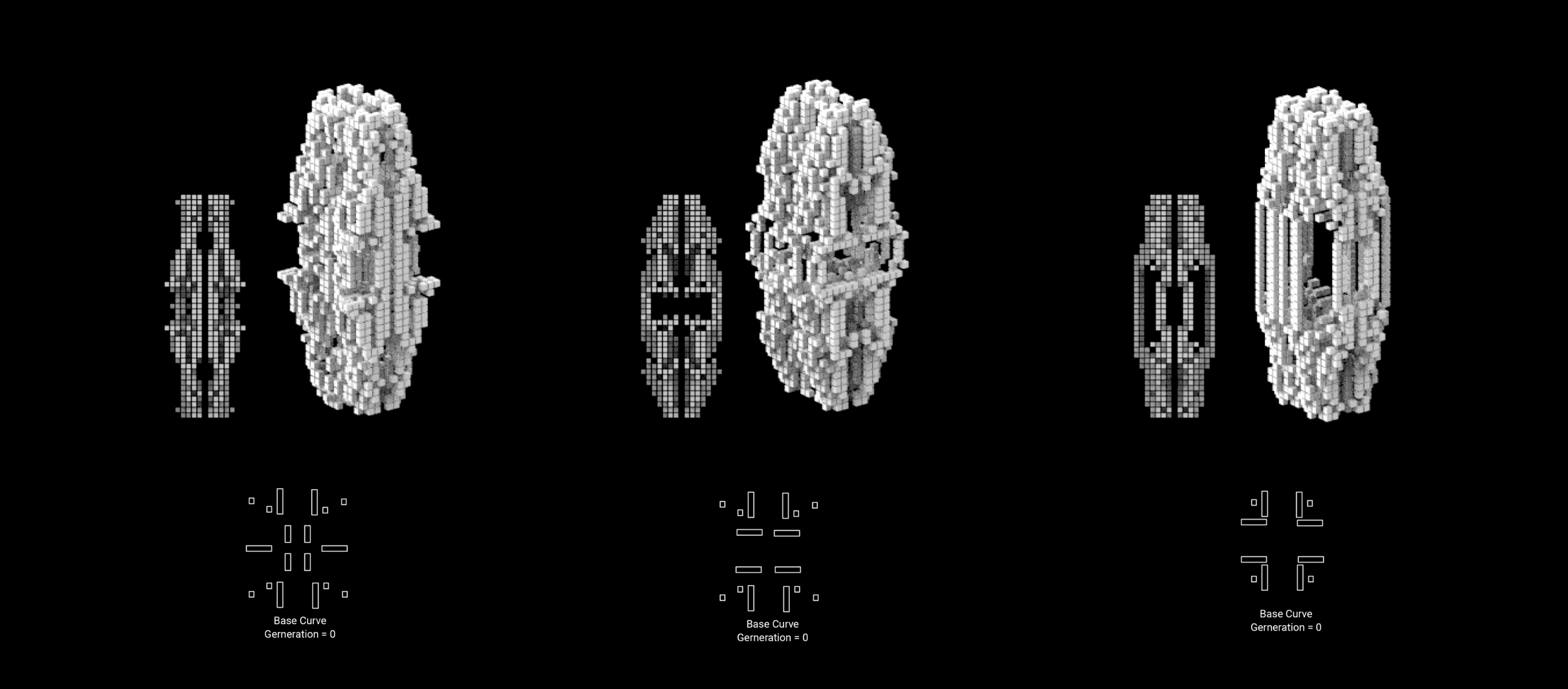
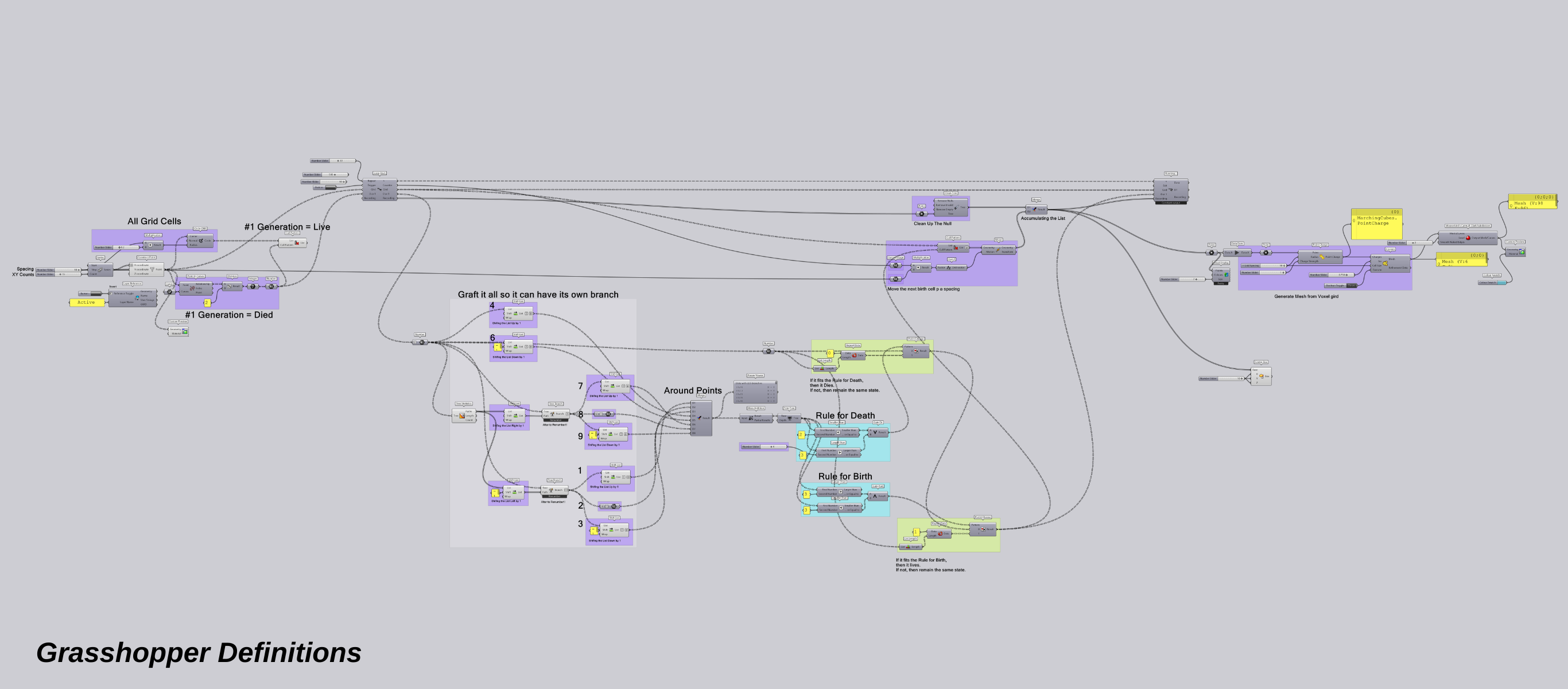
Conway's Game of Life is a cellular automaton devised by the British mathematician John Horton Conway in 1970. It is a zero-player game, meaning its evolution is determined by its initial state, requiring no further input. It uses Grasshopper to mimic its generation, with each generation being created and recorded in each layer of the column. In my design, I limited the column generation to a 10x10 square and stopped at the fiftieth generation.
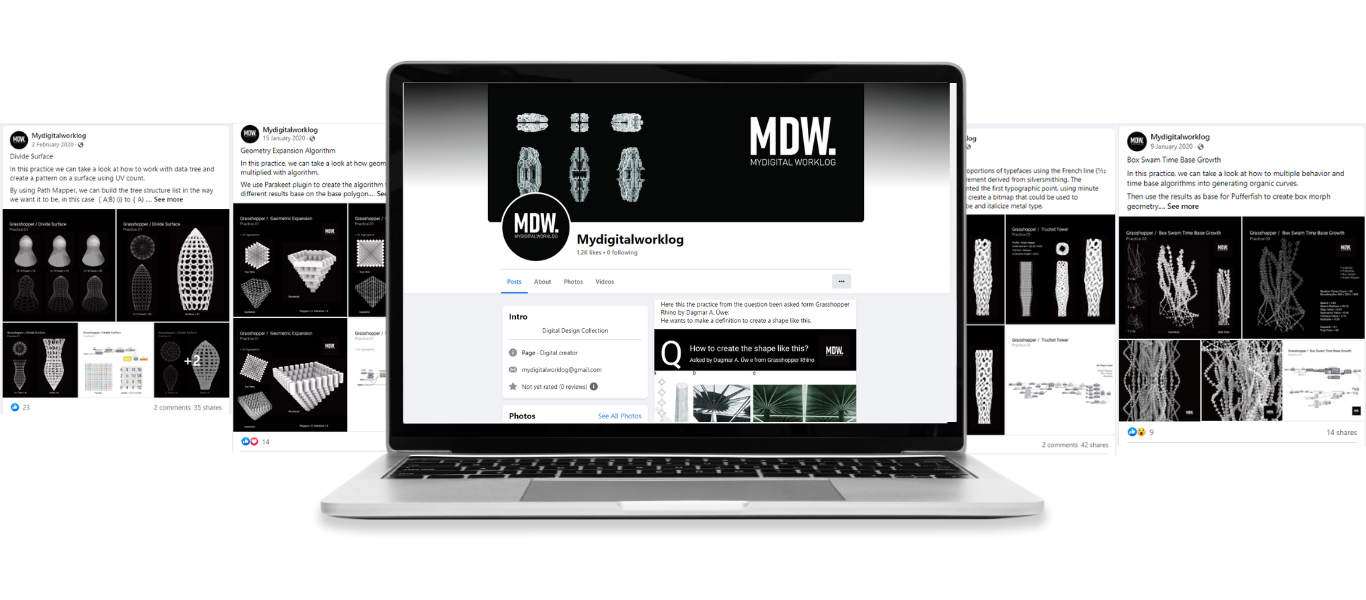
I had so much fun learning parametric design; why not build a Facebook page to share what I learned? That is how Mydigitalworklog was born. This is my very first time experiencing the power of the internet, and the page has attracted more than 1.2k followers over a year. People will reach out to me to discuss how a specific type of design was made or send me some of their grasshopper definitions and ask me to find where they went wrong so their definitions are not outputting what they expected.
Feel free to check on the old posts and find out more designs!