Digital Design
Algorithm of Regeneration - The Third Generation City
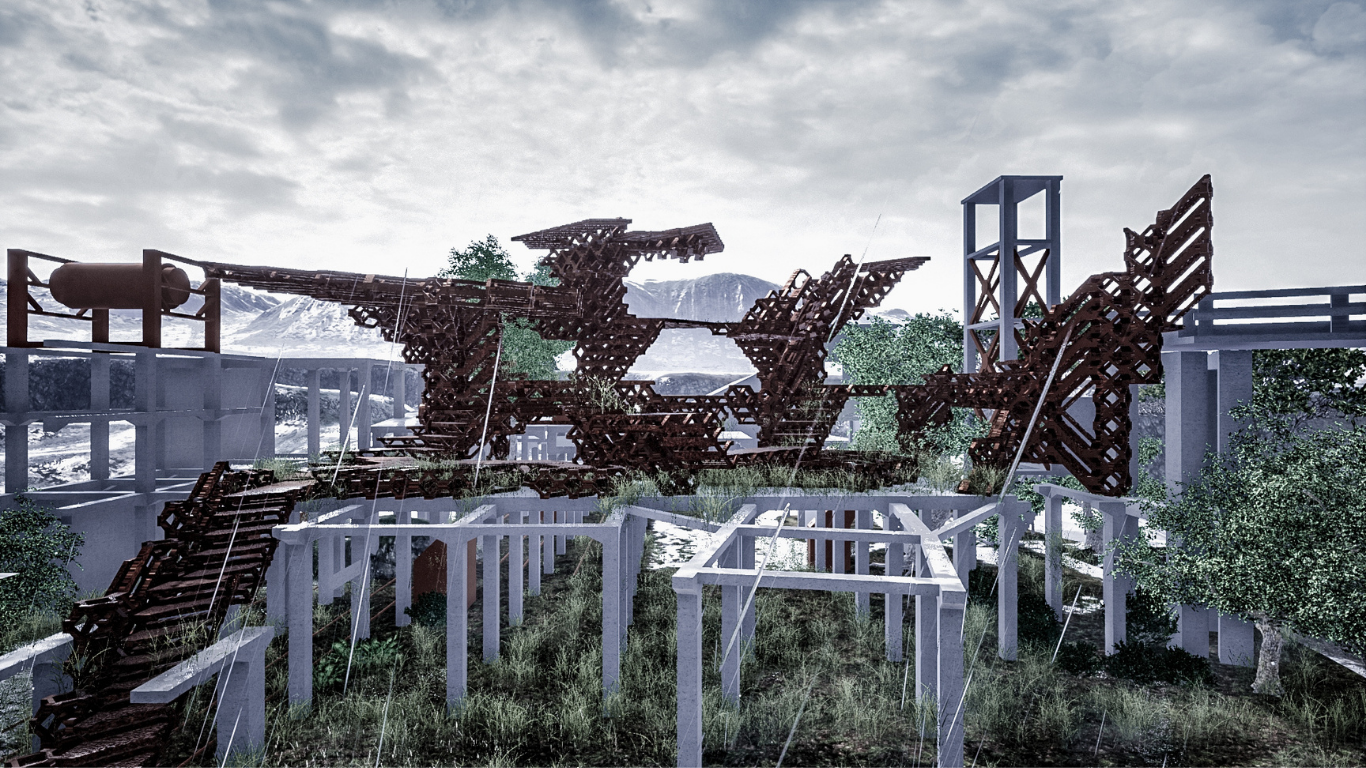
For my last year in architecture school, I decided to explore the possibilities of implementing digital design into my project. I am particularly interested in the generation in a digital way, which sets the difference from the traditional design methodology. We no longer need to draw each notation one by one but design with a series of abstract thinking.
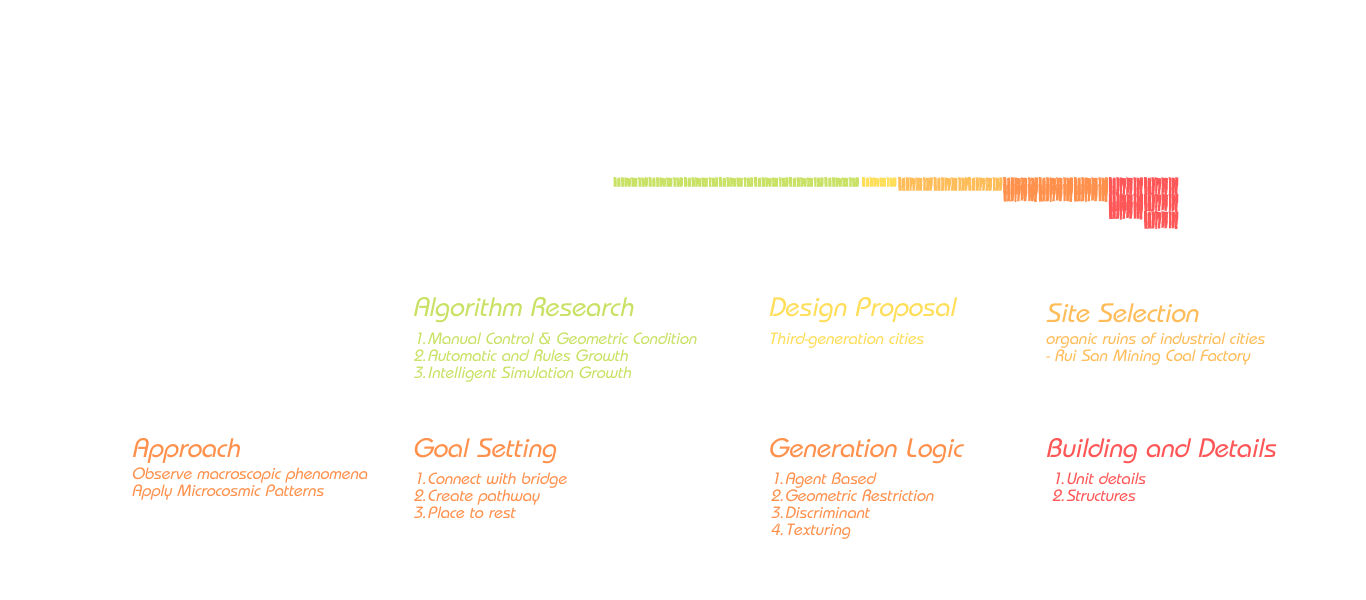
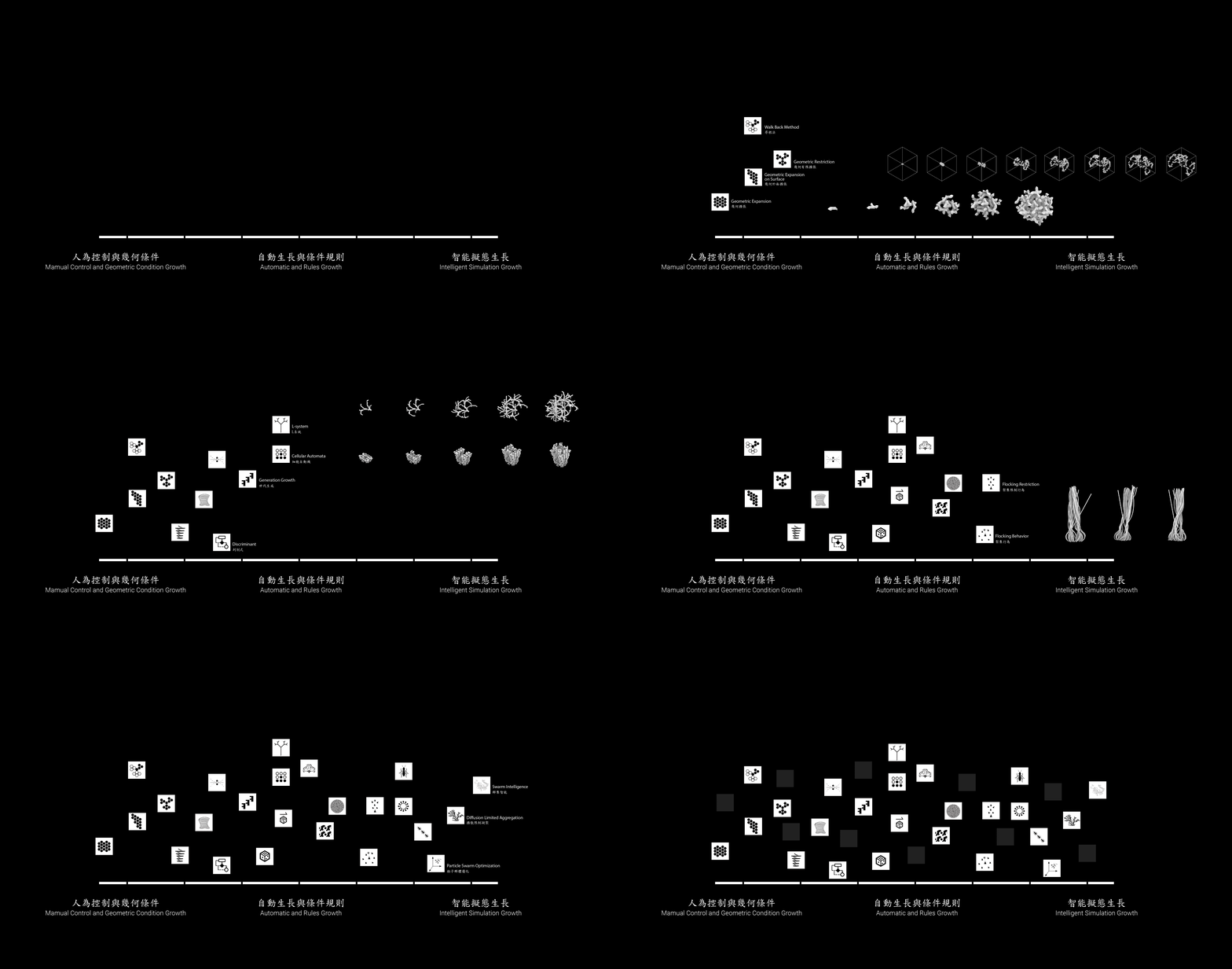
My thesis started with investigating different algorithms, which gave me a complete picture of what generation looks like. I discovered there is no solution to it all, but it looks more like a spectrum, with one end starting with manual control and geometric growth and the other as intelligent simulation. (1)Algorithms grow geometry by the nature of the shape, (2)Grow by setting the relationship with the last generation, and (3) simulate the behavior that has been observed from the subject. I categorized them into three sets: geometry expansion, generation growth, and behavior and time-based. I want to implement these tools into my design.
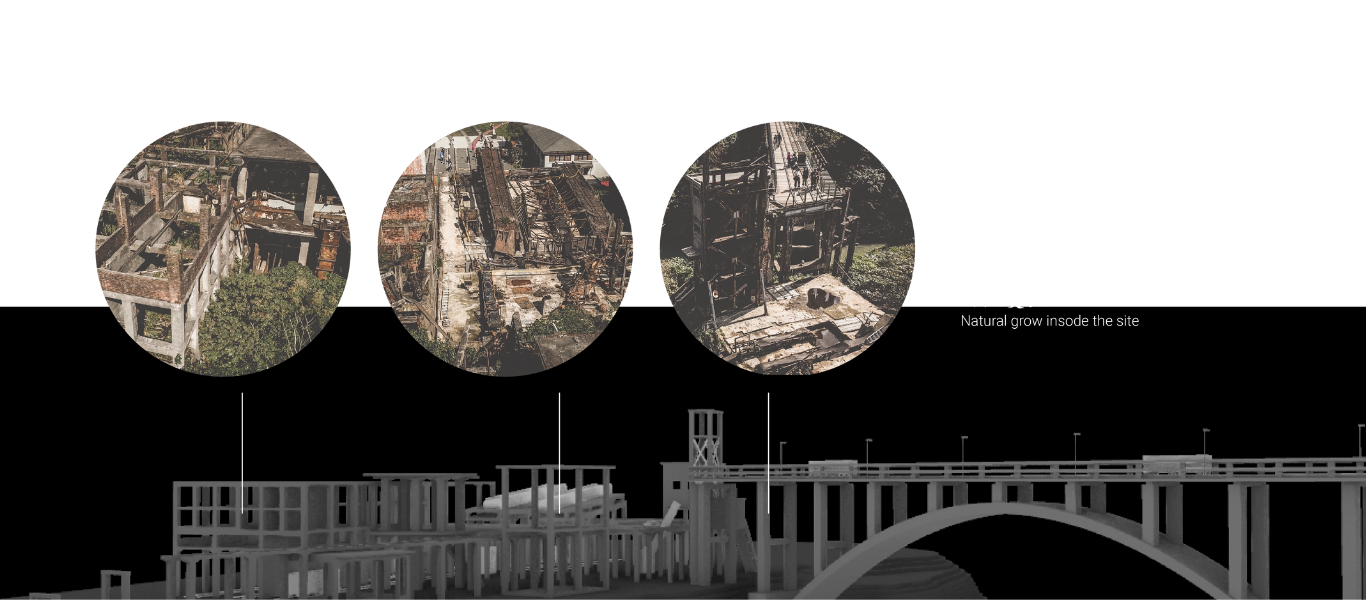
Given the nature of the generation, I would like to select a ruined place as my site. I’ve investigated several abandoned factories in northern Taiwan and finally chose the Rui San coal mining factory (瑞三礦業整煤場)as my site. It locates in the middle of the mountains, right next to Houtong Station (猴硐車站) and Keelung River (基隆河). For its production purpose, which has to host the machines within the building, the second and third floor of it was built with timber to absorb the vibration of machines, and the ground floor was reinforced concrete. In addition, a bridge was connected to its second floor severs the purpose of coal transportation.

As time passed, the factory was abandoned, the timber structure deteriorated and collapsed, the building was no longer connected to the bridge, and nature thrived on the site. Its condition is at the start point of the third-generation city where artificial structures are dead, and nature grows inside. I’m determined to design a project that can revitalize part of the building, which provides accessibility to the site.
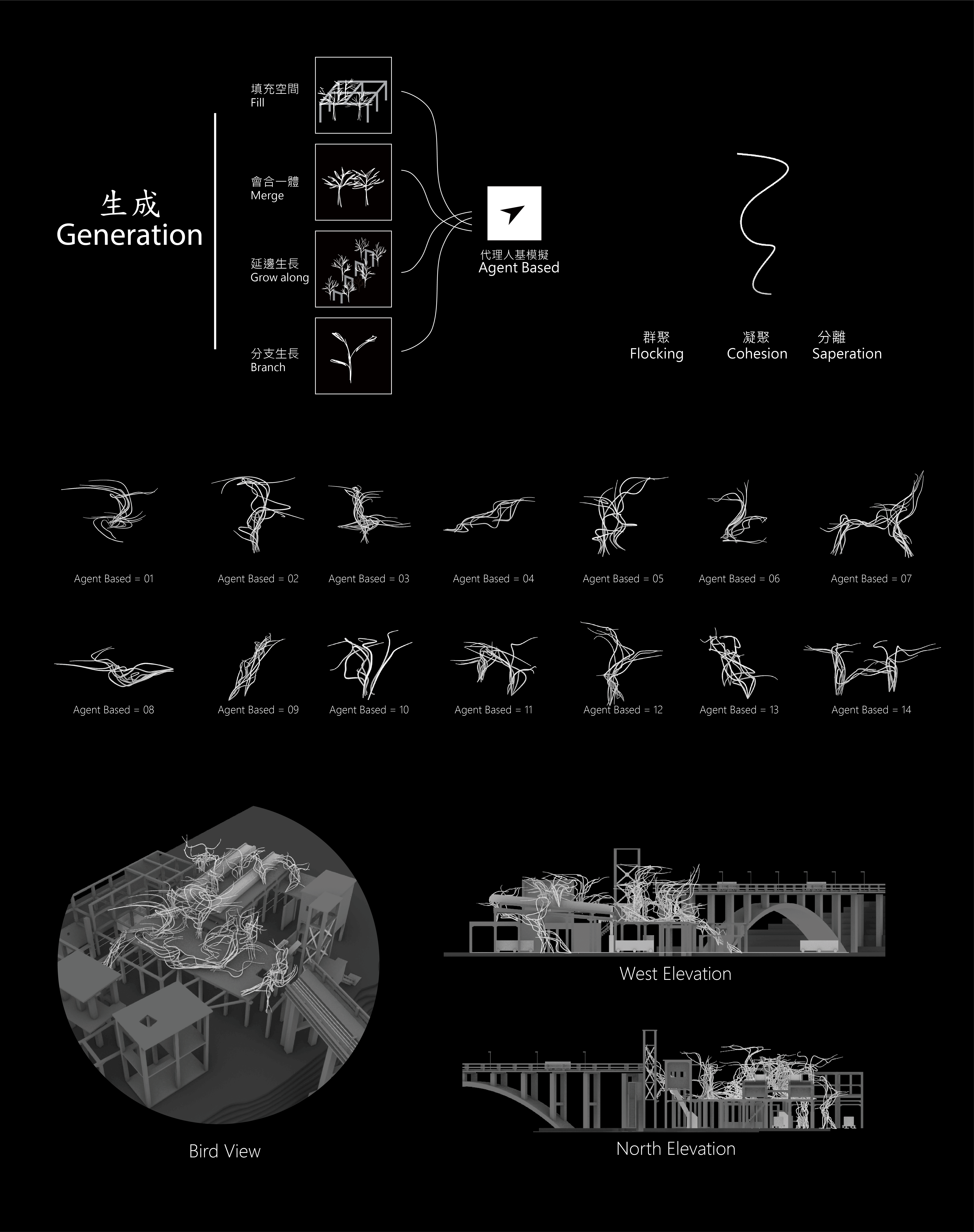
Some phenomena can be observed on the site. The part about how greens grow and occupy the building interested me the most. I listed four behavior of how a tree grows: merge, fill, along, and branch. Also, some patterns can be found on the site, such as cracks, mottled, and corrosion, which share a scattering nature.
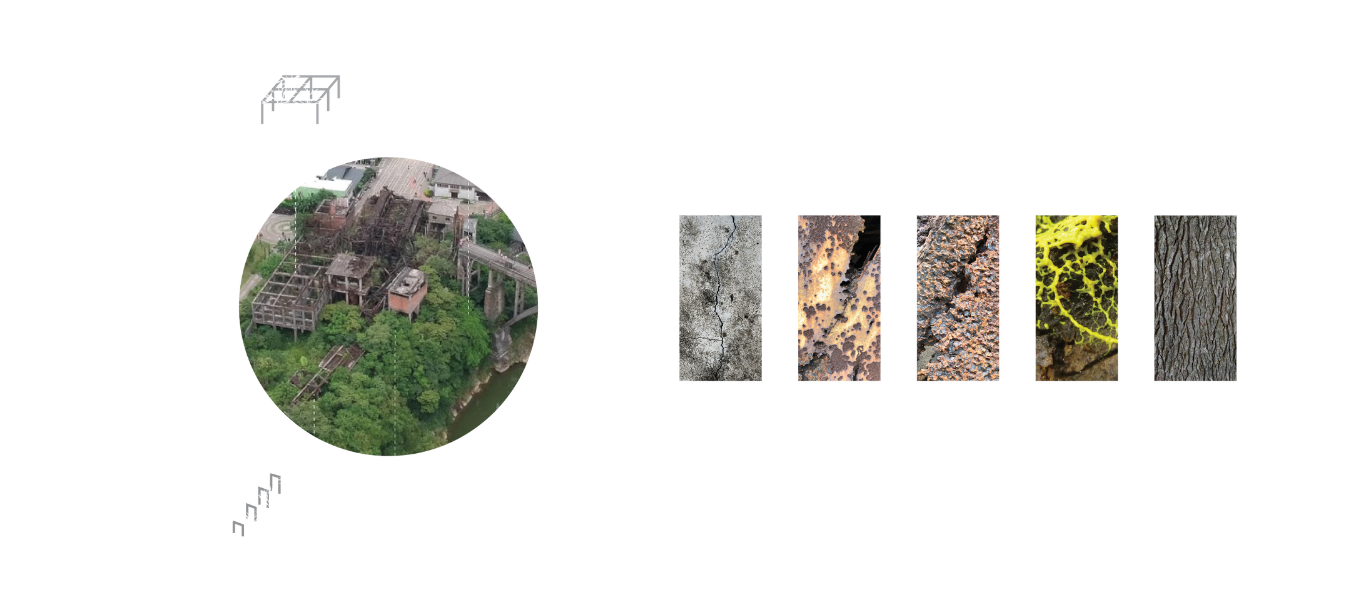
I came out with the idea to use these phenomena and micro patterns as my design material. And to connect the plaza, the bridge, and the site.
There are two parts to this design process: generation and replacement or texturing.
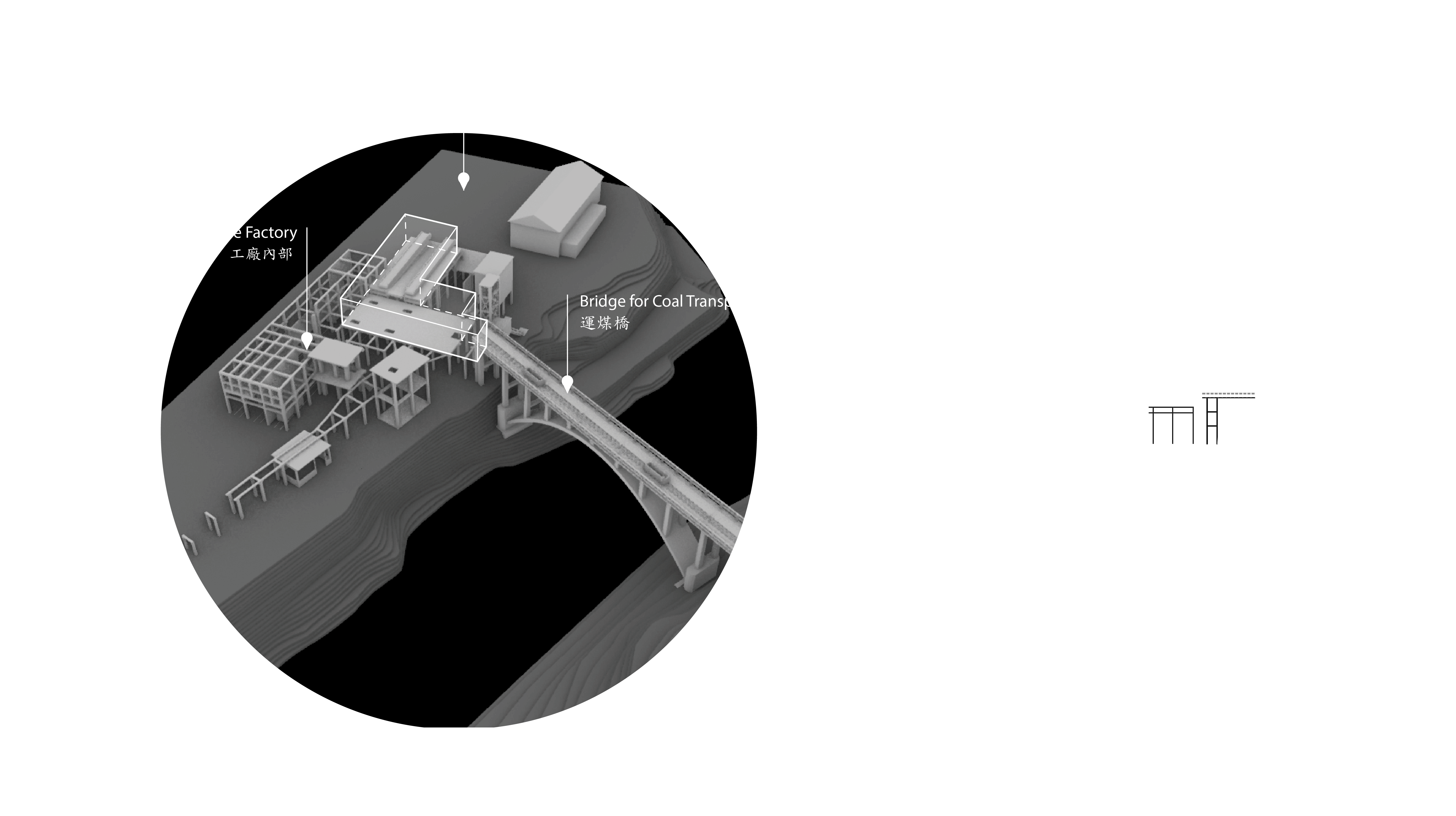
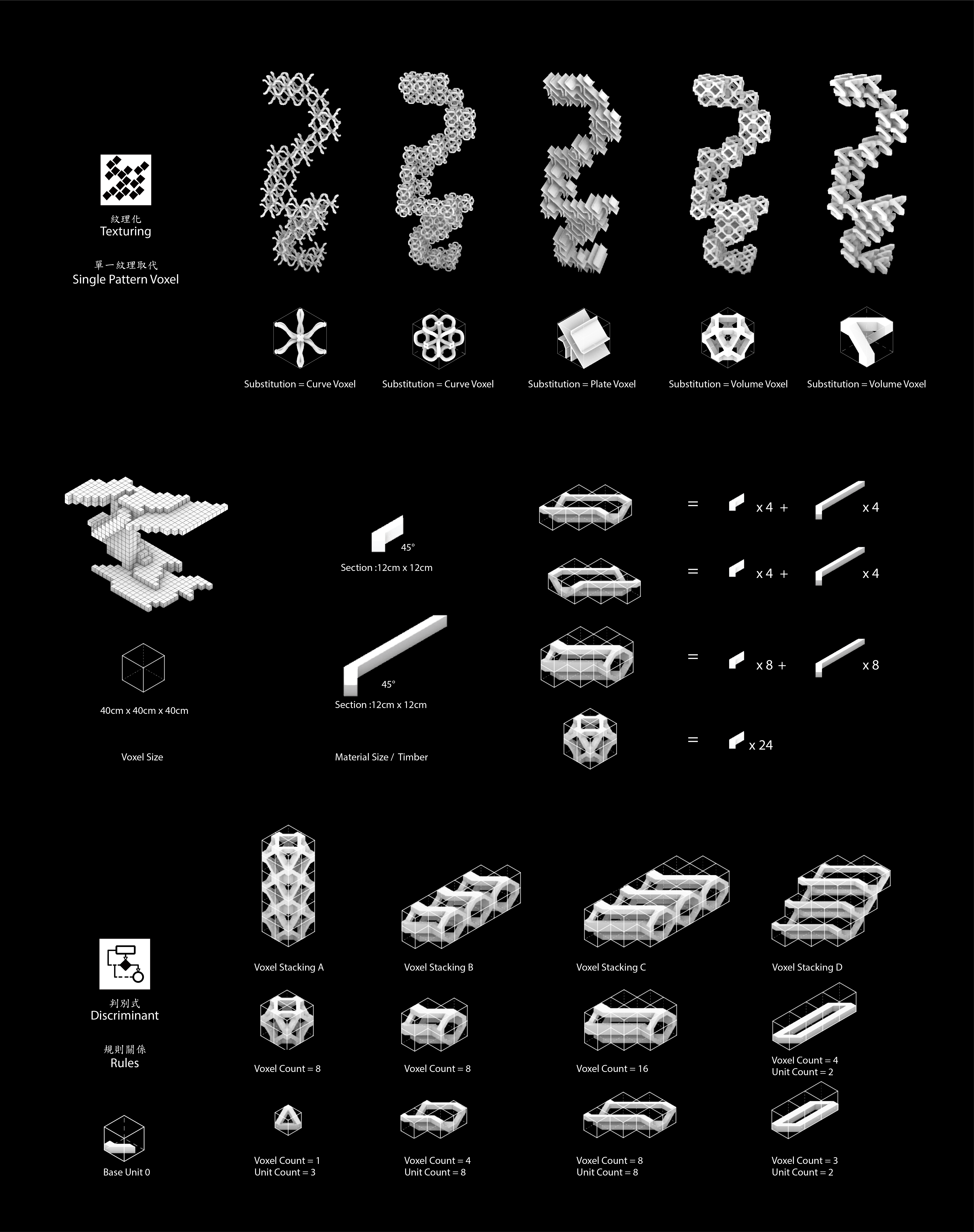

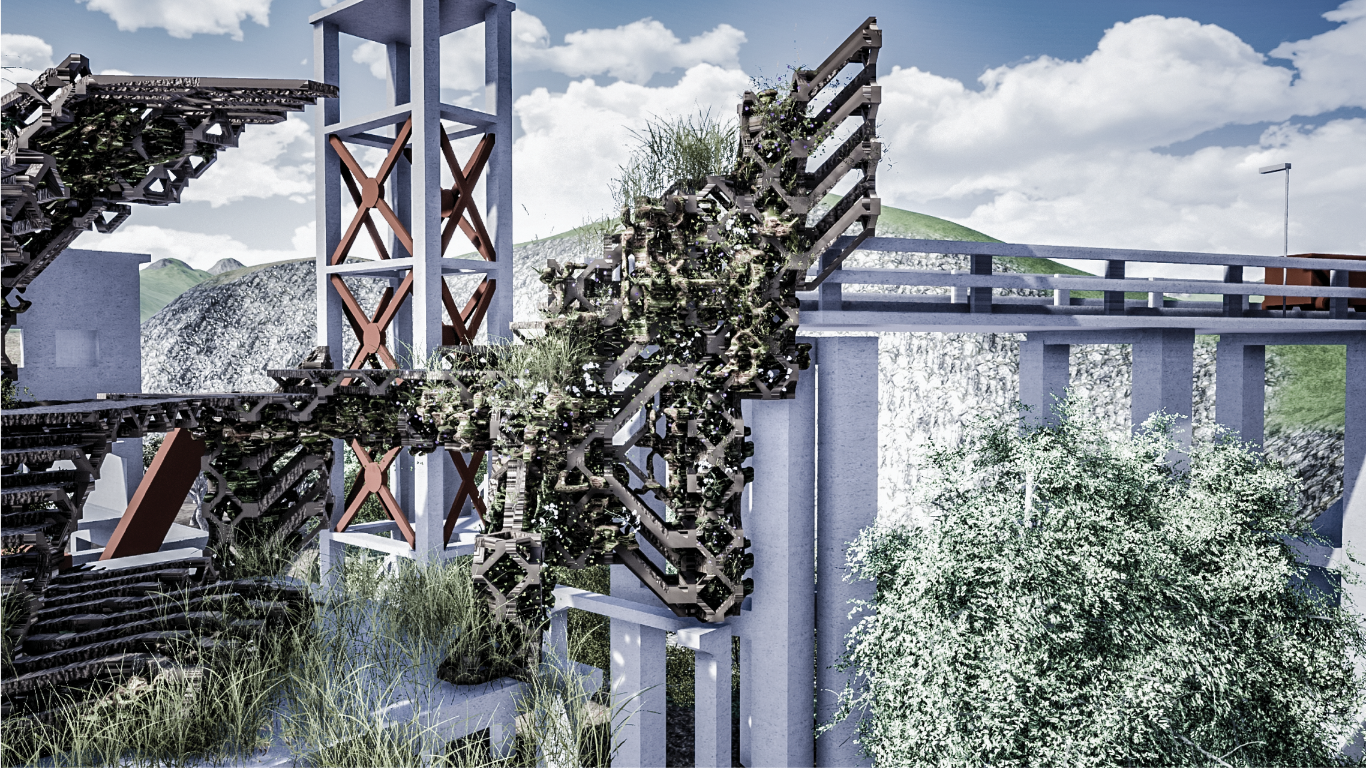
This long-abandoned coal mine factory belongs to the starting point of Marco Casagrand's so-called "third-generation city"-"the death of man-made objects, the natural growth." At this point, I want to make a permanent, temporary design proposal, regenerate part of the building space with an algorithm, keep traces of past time, recreate the space that coexists with nature, and design a third-generation city where man and nature coexist.
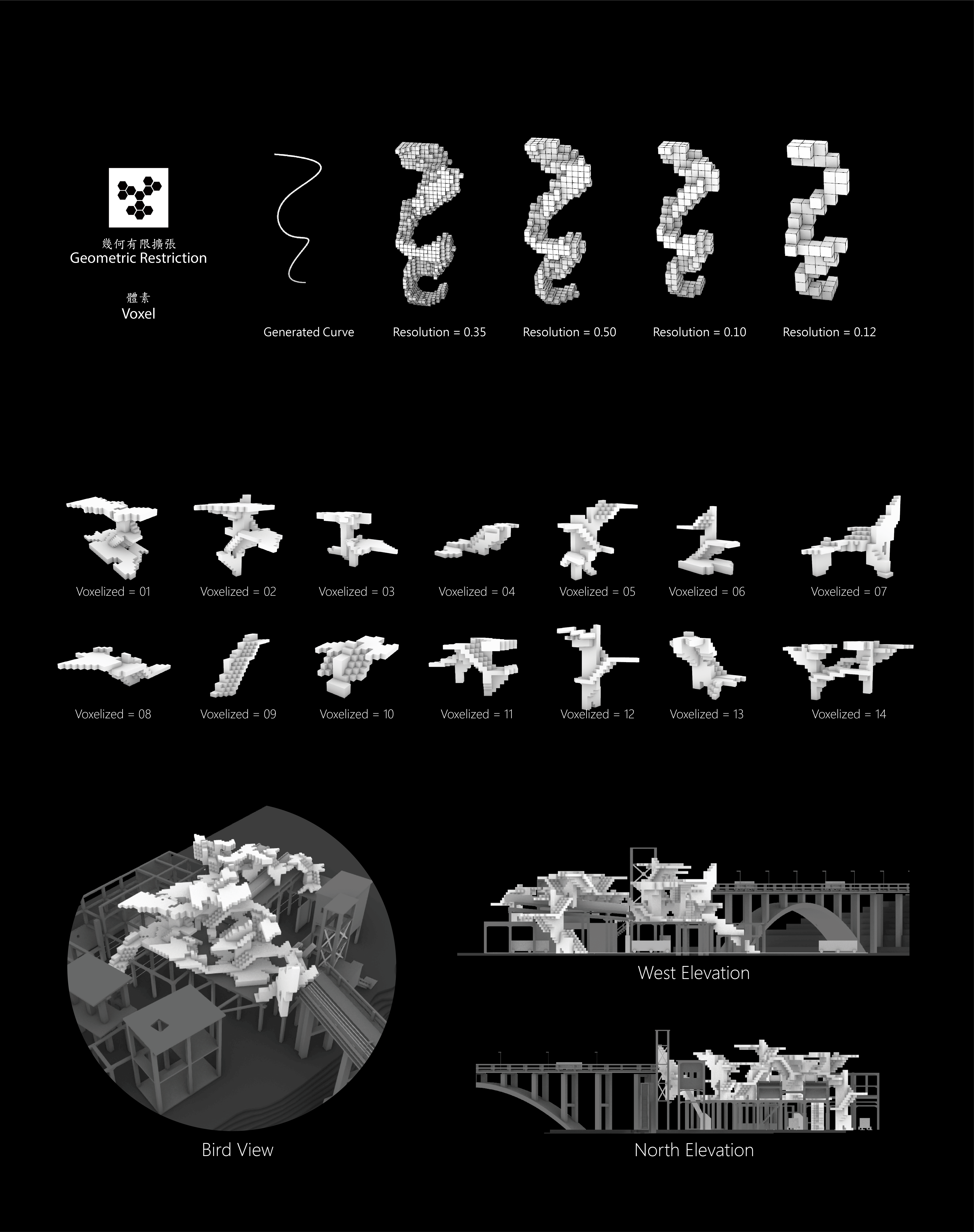
The growth of trees can be observed on the site, and over time it gradually occupies the remnants of this artificial building. Such a macroscopic phenomenon can be generated by using an Agent-based to simulate the growth of trees. Behavior such as Fill, Merge, Along, and Branch. After generating the curves in this way, a voxel algorithm can be used to create empty voxels with different resolutions. Then it can be a multi-rule replacement of re-texturing to give it a new look. Such a translation method with the microscopic textures that needed to be seen on the site was initially formed into structures, which were used as the foundation in the third-generation city to allow the plants on the site to grow and develop a combination of artificial and organic matter. Reconnecting the original coal transport bridge and the factory will enable people to enter the site to witness history traces.

.png)
This project was selected for the TKU Architecture Class of 2020 Thesis Design Award Final List.